Alabama is Letting a Man Starve in Solitary and Calling it “Care”
Day 23 of the Swift Justice hunger strike exposes ADOC’s scripted indifference, medical stonewalling, and a state’s refusal to document a life-or-death crisis.
Alabama’s prison system is not “in crisis.” A crisis is an exception—an interruption of normal operations. What is happening inside the Alabama Department of Corrections is far more damning than that: the cruelty is routine, the opacity is policy, and the indifference is structural. When an incarcerated man has to risk organ failure just to force the State of Alabama to acknowledge his existence in writing, the problem is not a broken system. The problem is the system.
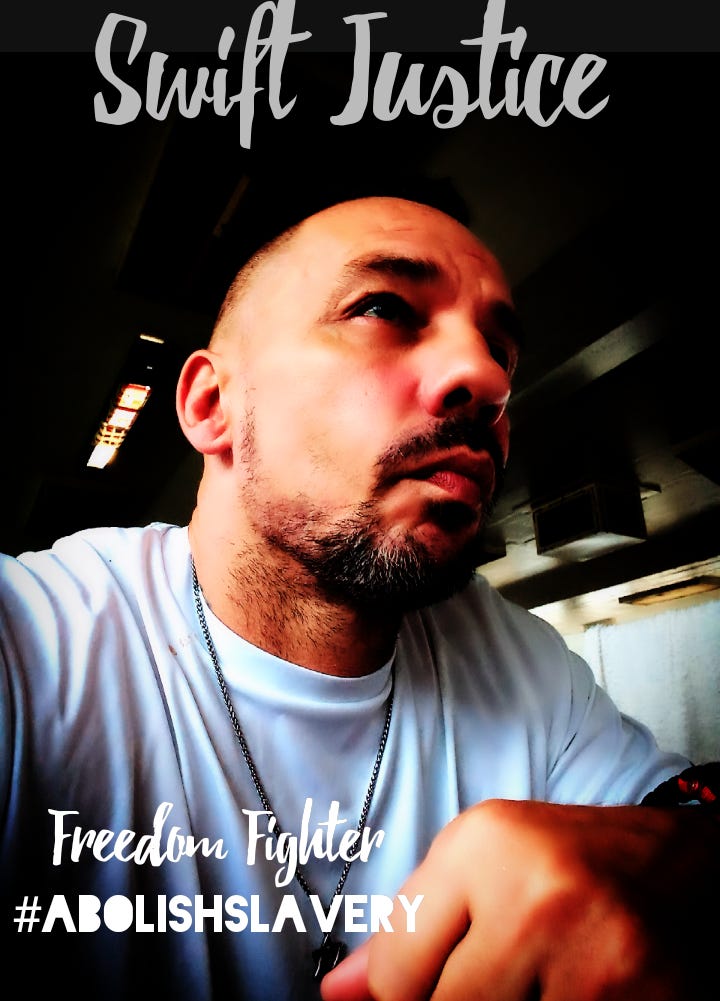
Kenneth Shaun Traywick—known publicly as “Swift Justice”—began a hunger strike on November 20, 2025, at Bullock Correctional Facility. He did it after what his supporters describe as retaliation and abuse, in a facility already dogged by allegations of violence, control, and institutional contempt. The hunger strike was framed from the beginning as protest: a conscious act meant to force accountability, transparency, and an end to retaliation. But as the days stacked up and the State’s silence hardened, it stopped being only protest. It became a high-risk medical event unfolding under taxpayer-funded custody, managed—if it is being managed at all—by a department that treats communication like contraband.
The facts that matter most now are simple and terrifying: by Day 18, his advocates were warning of critical medical risk; by Day 19 they were counting the hours—more than 456 without food; by Day 21 the family reported he had been held In solitary since roughly Day 4 with no confirmed medical or mental-health evaluations; by Day 22 the only “answer” the family could extract was a shrug disguised as procedure: “YesCare.”
This is what “Impacting lives for a safer Alabama” looks like when stripped of press-release varnish. It looks like a wife begging for confirmation that her husband’s heart is still beating—and receiving voicemail, busy signals, and scripted non-answers. It looks like a state agency that can discipline, isolate, confiscate, and retaliate with speed, but cannot—or will not—produce a written clinical update when an incarcerated person is starving in its custody. It looks like leadership that expects the public to accept a blank stare as a medical plan.
By Day 15, the family and UVOTCJ stated they still had no written medical update—no vital signs, no monitoring status, no documentation—despite a request for written confirmation by December 1, 2025. They were not asking for privileged details. They were asking for the bare minimum: confirmation of monitoring and the fundamental safeguards any minimally competent medical system would consider mandatory during prolonged fasting, especially for someone with serious pre-existing conditions.
By Day 16, the veneer cracked even further. UVOTCJ reports that Dr. Elizabeth Hancock Traywick—Swift’s wife and POA—attempted to relay critical medical history and request welfare status. She was met with a bureaucratic loop that reads like parody until you remember it’s happening around an active starvation event. According to the family, Warden Charles McKee repeated the same phrase to every question, and nothing else of substance: “He’s monitored daily. He’s been offered meals every day. Vital signs are being collected when he allows us to do so. Other than that, I cannot tell you anything else.” A human life reduced to a rehearsed sentence, delivered like a customer-service disclaimer.
And then there is the medical vendor.
YesCare, the contracted healthcare provider for ADOC, is not a random name pulled from a hat. It is the inheritor of a corporate lineage that—by public reporting—has been drenched in litigation, patient harm allegations, and strategic bankruptcy tactics that critics say were designed to fence off liability while preserving revenue. That matters here because when a family says they cannot obtain meaningful medical communication during a prolonged hunger strike, they are describing not just a failure of empathy. They are describing a predictable outcome inside a model where responsibility is endlessly outsourced and accountability is perpetually deferred.
In this case, UVOTCJ reports that YesCare refused to accept medical information from the spouse/POA, stated that they “do not accept POA/HIPAA forms,” and hung up when medical concerns were raised. Whether YesCare’s staff acted out of training, fear, policy, or contempt, the result is the same: the family was blocked from providing medically relevant history and blocked from receiving meaningful confirmation of monitoring. That is not a neutral bureaucratic misfire. In a high-risk starvation event, it is a direct threat to life.
YesCare’s origin story is not rumor; it is documented in reporting and court-linked narratives. Corizon Health—one of the largest private correctional healthcare companies in the U.S.—split operations into YesCare and Tehum Care Services, after which Tehum filed for bankruptcy in February 2023. Reporting has described this as a “Texas Two-Step” style maneuver used in other contexts to isolate liabilities. Reuters has reported on the Tehum bankruptcy case and settlement activity, including the chronology of the split and bankruptcy filing. The Marshall Project has reported on Corizon’s restructuring, including how the valuable operating business continued while liabilities were channeled into the bankrupt entity. Business Insider has reported on the creation of YesCare and the bankruptcy of the renamed entity Tehum. Public interest legal reporting has also summarized the structure and the implications for claimants. Whatever one thinks of the legality, the ethical shape is unmistakable: the company that continues operations is insulated from a large share of the lawsuits arising from alleged harms.
Alabama selected YesCare as its prison healthcare provider under a contract that ADOC stated would go into effect April 1, 2023. The contract’s scale—and the scrutiny surrounding it—have been publicly reported. The Associated Press reported that Alabama lawmakers delayed implementation of the contract with a hold amid concerns about cost, transparency, and the company’s legal history, noting YesCare’s evolution from Corizon and the controversy around the procurement process. ADOC published a news release about selecting YesCare and the effective date of the contract.
Now place that corporate reality back into the cell where a man is starving.
The family’s correspondence is not casual outrage. It is evidence construction. On December 3, 2025, Dr. Traywick wrote a formal letter to Commissioner John Hamm, Bullock wardens, and ADOC leadership outlining alleged retaliation, denial of constitutional rights, denial of access to courts, communication blackouts, and conditions of confinement concerns. The letter does what the State refuses to do: it turns lived experience into documented claims, cites legal standards, and demands corrective action. It describes a world where “digital-only mail” becomes, in practice, no mail at all—especially for someone in restrictive housing without tablet access, without writing materials, and without a functioning way to request legal resources. It describes law library access denied almost entirely, even as legal matters remain active. It describes sanitation and food contamination concerns, pest attraction, and humiliations so petty they become sadistic—like being ordered to stop urinating during count, as if bodily functions must obey a schedule.
This is not simply harsh incarceration. This is the systematic stripping away of every stabilizing tie—legal, familial, informational—until a person becomes pure dependency: entirely at the mercy of the institution, entirely unable to validate what is happening to them, entirely unable to contradict the official narrative when the official narrative is a single sentence repeated on loop.
By Day 18, UVOTCJ escalated the warning: medical risk had become critical, with potential for arrhythmia, organ failure, and fatal collapse. They requested that by end of day December 8, 2025, ADOC/Bullock/YesCare confirm to the family: vital signs monitoring frequency, CMP labs (electrolytes, kidney and liver function), a cardiac monitoring plan, and whether retaliation-linked disciplinaries would be examined. They put the department “on notice” that failure to act could be viewed as deliberate indifference.
That phrase—deliberate indifference—is not rhetorical flourish. It is a legal threshold. It is the point where neglect becomes constitutional liability, where “we didn’t know” collapses under the weight of documentation showing that the State was warned, repeatedly, in writing, about an obvious and substantial risk.
By Day 19, the advocates weren’t just pleading. They were describing an “active medical risk event.” They were asking aloud what any sane observer would ask: when you have a starving person with known vulnerabilities, and the institution refuses to verify monitoring or provide documentation, what are we looking at except a slow-motion disaster?
By Day 21, the communications contradictions hardened into something that looks less like incompetence and more like an operational strategy. According to the family, ADOC told a reporter that Swift must sign Form H-2© before the family can receive updates, while the family states Swift has been denied the ability to communicate, denied staff access, denied writing materials, and denied the form itself. They also report that Swift previously completed an H-2© naming his wife, and that she was later told by an ADOC representative that the form “does not exist” and ADOC “does not recognize any form like this.” The State’s posture—again, according to the family’s account—is simultaneously “the form is required” and “the form doesn’t exist,” an absurdity that would be comedic if it weren’t orbiting a medical emergency.
This is how bureaucracy becomes a weapon: you are required to complete the form you cannot access, and your spouse is denied information because the form you already signed supposedly never existed.
By Day 22, the system offered a new cruelty: communication without content. Warden McKee called Dr. Traywick briefly and confirmed he had met with Swift and knew his demands. But he could not confirm that Commissioner Hamm had been engaged, and he offered no substantive medical explanation beyond invoking YesCare’s name like a talisman: “YesCare.” Attempts to reach the Director of Nursing—described as Ms. Hall—were met with non-functioning voicemail, abrupt transfers, and terminated calls. One transfer reportedly resulted in the medical line immediately cutting off the call and redirecting back to a line that rang endlessly. That’s not “busy.” That’s not “high volume.” That is a closed loop designed to exhaust the caller until they stop calling.
Meanwhile, the medical content from the family is sober, specific, and devastating: clinical monitoring requests aligned with recognized standards; labs to detect metabolic derailment; cardiac monitoring; refeeding protocols; thiamine supplementation; staged caloric reintroduction. This is what it looks like when the citizen does the state’s job for it, hands it the checklist, and still gets silence in return.
And hanging over all of it is a simple moral truth Alabama’s leadership seems determined to deny: custody creates obligation. Contracted care does not shift responsibility. Silence does not reduce liability. Silence compounds it.
Commissioner Hamm cannot outsource his duty to a vendor and call it leadership. The Governor of Alabama cannot preside over a prison apparatus repeatedly accused of violence, neglect, and unconstitutional practices and then hide behind slogans when a hunger strike enters its third week. The State of Alabama cannot keep taking custody of human beings and then acting surprised when people demand that custody come with documentation, monitoring, transparency, and restraint. This is not a radical demand. It is the baseline for lawful government.
Alabama’s prisons have become notorious not because critics are hysterical, but because the pattern is documented in litigation, reporting, and federal scrutiny: overcrowding, understaffing, medical neglect, violence, retaliation, secrecy. A hunger strike does not create those conditions. A hunger strike reveals them. It pulls them into daylight and forces officials to either respond like caretakers of human life—or expose themselves as administrators of human disposal.
That is what Swift Justice has done. He has forced the State’s hand, and the State’s hand—so far—has been a closed fist.
When the warden’s only answer is a repeated phrase, when the medical vendor’s only posture is refusal, when the commissioner cannot even be confirmed as engaged, when the governor’s system treats a spouse’s fear as an inconvenience, the message is unmistakable: in Alabama’s prisons, suffering is not an unintended side effect. It is the language of governance.
And in that language, starvation becomes a negotiation tactic, silence becomes a management style, and a human being becomes a problem to be waited out.
by: Guest Contributor, Will Hazlitt


