Beauty Knows No Limits, No. 14 & Faces of the Future, No. 2
Part of an ongoing series from the R9 Media Photo Collective
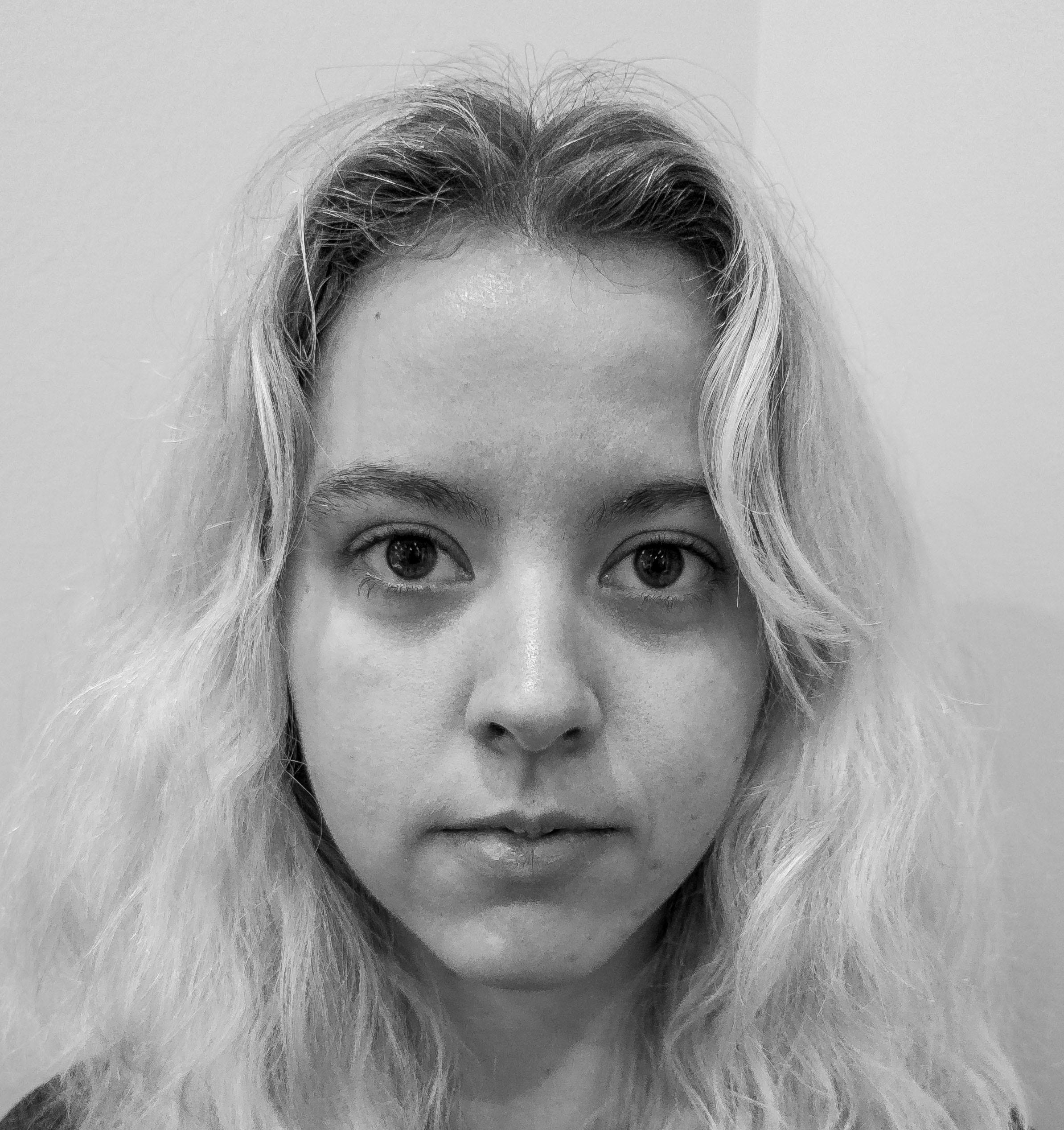
“There are portraits that ask to be examined, and there are portraits that make examination a reciprocal act. This photograph belongs emphatically to the second kind. The young subject occupies almost the entire square frame, facing the camera without disguise, diversion, or explanatory gesture. Nothing intervenes between the viewer and the face. Yet this proximity does not confer mastery upon us. The longer we look, the more apparent it becomes that the gaze is being returned. We are not permitted the comfortable fiction of observing unseen. It is we who gradually become conspicuous.
The composition possesses an almost severe simplicity. The face is held frontally, its principal features aligned around a strong central axis. The bridge of the nose establishes the vertical structure, while the eyes create a horizontal line across the middle of the image. In less attentive hands, such symmetry could become clinical or merely diagrammatic. Here, however, the order is continually disturbed by living detail. The hair falls differently on either side; individual strands escape the larger arrangement; slight tonal variations move across the skin. Minute differences between the two halves of the face prevent formal balance from hardening into lifeless perfection.
The square format intensifies this effect. It provides no directional escape and no narrative space into which the subject might retreat. The face is neither approaching nor departing. It is simply present. Even the background offers almost no depth. Its pale, neutral surface merges at points with the lightest strands of hair, causing the outer contours of the head to soften while the darker roots, eyebrows, pupils, and nostrils draw attention inward. The image seems to gather itself around the eyes. Rather than surrounding the subject with an environment, the photographer has surrounded the face with silence.
Black and white is essential to this concentration. It does not function as a nostalgic embellishment, nor does it attempt to confer borrowed seriousness through association with photographic history. Its purpose is structural. Colour has been removed so that differences in luminosity can do the work. The pale hair and background establish an expansive upper register, while the darker features give the face its visual gravity. Between these extremes lies an unusually broad range of greys: the sheen of the forehead, the soft shadows beneath the eyes, the modelling around the nose, and the restrained definition of the lips. The face emerges gradually through tone rather than being carved out by aggressive contrast.
The eyes are the undeniable centre of the portrait, but their force does not arise from theatrical intensity. They are open and attentive without offering an easily named emotion. One could call the expression serious, vulnerable, cautious, or self-possessed, yet each description proves inadequate almost as soon as it is applied. The photograph wisely preserves this ambiguity. It refuses to turn a momentary expression into a declaration about character. The subject is not required to disclose an inner life merely because the camera has come close. What is given is presence, not confession.
This distinction is important. Contemporary portraiture often asks the face to perform immediately. A smile must communicate warmth; a lowered gaze must suggest introspection; an exaggerated stillness must signify defiance. Here, the mouth remains at rest and supplies no convenient emotional instruction. The subject does not reassure the viewer, seduce the viewer, or dramatize resistance to the viewer. The expression remains suspended before performance. That suspension gives the photograph its peculiar authority. We encounter someone who has not been converted into a message for our consumption.
The close crop removes nearly every customary source of biographical information. There is no visible setting, gesture, occupation, possession, or social role. Clothing is almost entirely absent from the frame. In this respect, the photograph recalls several historically impersonal forms: the identification picture, the photographic typology, the institutional record. Yet it refuses their reductive purpose. Bureaucratic images strip away context in order to make a person classifiable. This photograph strips away context in order to make classification impossible. The subject has been separated from anecdote, but not from individuality.
That individuality is sustained by the photograph’s treatment of physical detail. Skin retains texture. Stray hairs remain visible. Light gathers unevenly across the forehead and beneath the eyes. Nothing is presented as a defect to be corrected, nor as evidence in some fashionable rhetoric of imperfection. These are simply the material facts of a human face. The image does not congratulate itself for allowing them to remain. It understands that beauty is not achieved by erasing evidence of life.
Within Beauty Knows No Limits, the portrait therefore proposes beauty as something more demanding than prettiness and more durable than compliance with a visual standard. Its beauty resides in the coherence between form and presence: the centred face, the steady gaze, the unembellished surface, and the refusal to solicit approval. The subject is beautiful not because the photograph claims to have discovered a flawless arrangement of features, but because it permits singularity to remain intact. Beauty here is not a prize awarded after comparison. It is the visible consequence of being regarded without being diminished.
Its place within Faces of the Future is equally compelling. The future is usually represented through spectacle: illuminated cities, new machines, anonymous crowds, or faces polished into frictionless symbols of optimism. This photograph rejects that vocabulary. It reminds us that the future will not arrive as an abstraction. It will be inhabited by particular people, carrying private histories, uncertainties, convictions, and forms of intelligence that cannot be read from their appearances. The young are too often treated as blank surfaces upon which older generations project either hope or alarm. This subject accepts neither burden. The gaze does not promise to fulfil our expectations, nor does it ask permission to exceed them.
The two series meet at precisely this point. Beauty knows no limits because a human being cannot be exhausted by the categories imposed upon appearance. The face belongs to the future because its meaning has not yet been settled by those looking at it. What makes the portrait memorable is not youth alone, nor symmetry, nor even the remarkable directness of the eyes. It is the sensation of encountering a life whose possibilities remain sovereign. The photograph brings us extraordinarily close, only to remind us that closeness is not possession. We may look, and we may be moved, but we are not entitled to conclude.
The future, in this image, does not smile for our reassurance. It looks directly back.”
- Élodie Vasseur
Paris, France


