Before Silence Becomes a Eulogy: The Medical Emergency Alabama Is Ignoring
YesCare’s history of negligence meets ADOC’s culture of retaliation — and one man’s life hangs in the balance.
He Reported Abuse. Alabama Threw Him in a Suicide Cell and Called It Procedure.
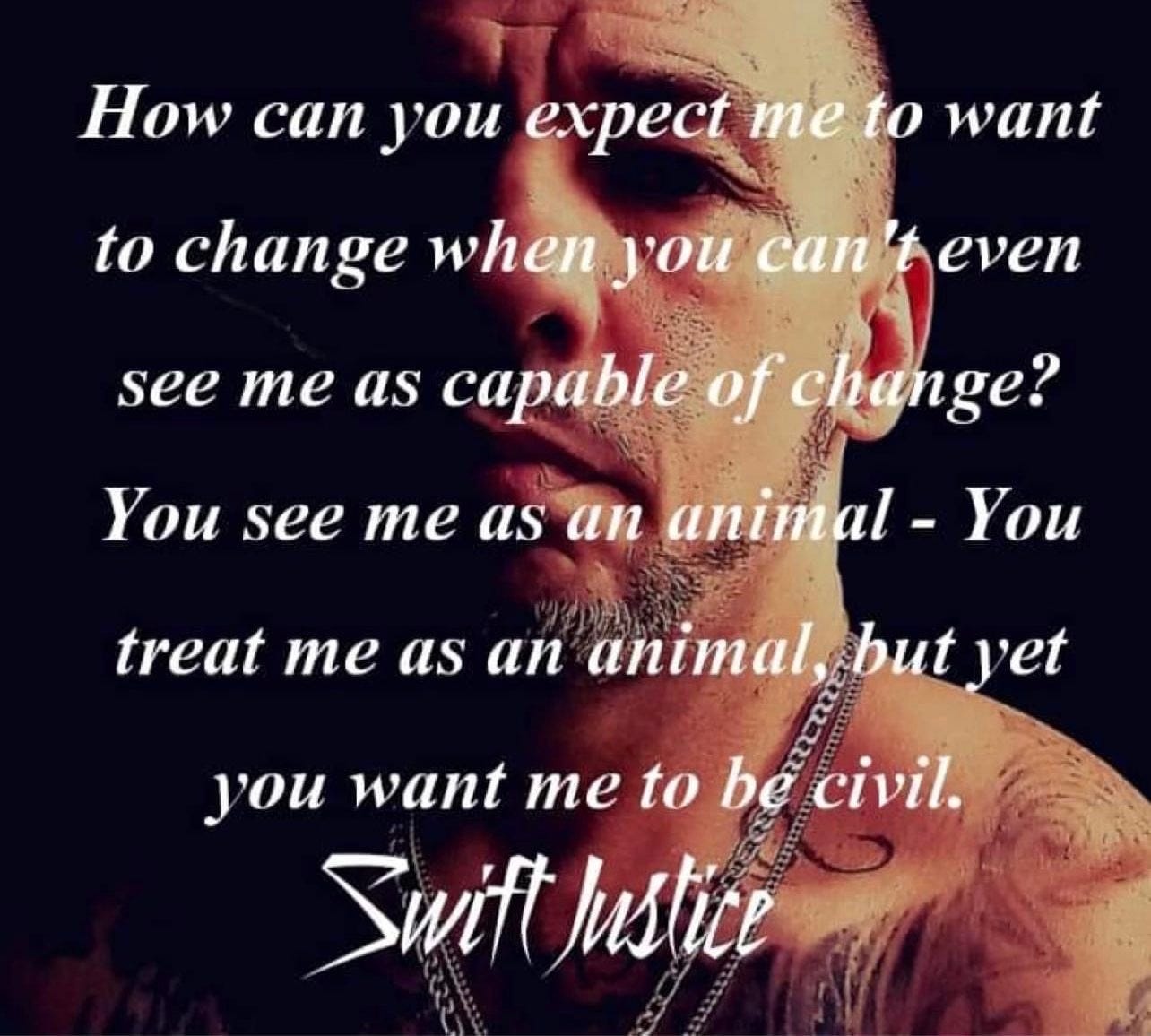
Swift Justice’s hunger strike exposes the brutal architecture of ADOC’s violence and silence.
On November 20, 2025, at Bullock Correctional Facility—a place already synonymous with Alabama’s violent, unconstitutional prison system—Kenneth “Swift Justice” Traywick was allegedly assaulted by Correctional Officer Glover. Witness accounts describe a scene both familiar and predictable inside Alabama’s Department of Corrections: Traywick, who had filed grievances documenting the misuse of chemical agents on mentally ill prisoners, was followed into another man’s bed area and sprayed from behind with mace.
There was no fight, no resistance, no emergency.
There was only retaliation.
Faced with a system that punishes dissent more aggressively than it punishes abuse, Traywick initiated a hunger strike at 10:52 a.m. that same morning. It was not a suicide attempt. It was not a mental-health crisis. It was the only nonviolent protest left to a man trapped in a state-run machine designed to disappear inconvenient truths and silence anyone who tries to speak them.
From the moment the hunger strike began, ADOC’s response was a portrait in cruelty disguised as procedure.
A System Built on Silence
Traywick’s wife—his medical proxy, his power of attorney—attempted immediately to verify that he was safe. She was met with voicemail, evasions, or bureaucrats who pretended not to recognize the very ADOC forms the department had required incarcerated people to sign in 2024.
His tablet was taken.
His writing materials were seized.
His stamps disappeared.
New disciplinaries materialized.
Outgoing mail failed to reach its destination.
Phone restrictions eliminated his access to family and attorneys.
Within hours of reporting an assault, Traywick could neither report nor document anything further.
And then came the suicide cell.
Naked.
No clothing.
No mattress.
No property.
No tablet or writing material.
No functioning means of communication.
Placed in a cell typically reserved for individuals threatening to harm themselves, Traywick—who had repeatedly insisted he was not suicidal—was stripped of every mechanism of self-expression except the decision to refuse food. It was a punishment wrapped in clinical language, a coercive tactic masquerading as “safety.”
For a man who had long advocated for the rights of mentally ill prisoners, the symbolism was cruelly precise: silence the advocate in the very cell where others have been silenced before him.
Days Turn Into Weeks, Transparency Turns Into Farce
By Day 7 of the hunger strike, Traywick’s wife still had no medical documentation, no written acknowledgement that he was being monitored, no assurance that anyone had laid eyes on him. ADOC offered only verbal phrases delivered by whichever staff member answered the phone:
“He’s fine.”
“He’s being seen.”
“He’s being monitored when he allows it.”
These were not updates.
They were rehearsed lines.
By Day 9, Traywick confirmed that he remained in restrictive housing—a placement he has described repeatedly as retaliation for his legal filings and his advocacy. Mail restrictions continued. Tablet access was nonexistent. Communication with his wife became so limited that ADOC’s denials of her attempts to reach him began to create an alternate universe: he was being told one thing inside, she was being told another outside, and the truth vanished between the cracks.
These were not administrative missteps.
They were deliberate structural obstructions.
By Day 10, the medical danger was unmistakable: Traywick has a history of chest pains, hypertension, elevated cholesterol, and liver disease. Ten days without food is a crisis for a healthy person. For him, it was an impending disaster.
When his wife asked how ADOC would safely reintroduce food when the strike ended—given the risk of refeeding syndrome, a potentially fatal condition—no one could answer. No plan existed. No documentation existed. The “nurse checking on him” may or may not have existed.
She demanded a written update by December 1.
No update came.
Day 15: The Crisis Widens Beyond One Man
On Day 15, UVOTCJ issued a press release listing not only Traywick’s lack of medical oversight but also broader systemic failures across Alabama prisons:
Bullock was reportedly without gas—meaning no heat and no hot food.
Multiple allegations of excessive force were emerging against Officers Glover and Bowen.
The new digital-only mail system had stopped delivering mail entirely.
Use of force incidents had been reported at Kilby.
St. Clair had reportedly suspended visitation and store access.
This was not a system under strain.
It was a system collapsing inward.
Traywick’s family again requested confirmation that he was being monitored for cardiac function, renal stability, blood glucose levels, and refeeding risk.
Again, nothing.
Their request was simple:
Incarceration is the punishment—not medical neglect or exposure to harm.
But in Alabama, the distinction between punishment and cruelty has long since blurred.
Day 16: The Corporate Machinery Behind the Silence
By Day 16, the situation crossed from negligence into something far darker.
When Traywick’s wife called to provide his medical history—and to warn about his heightened risk of cardiac collapse—she reached Warden Charles McKee. His response, repeated mechanically no matter what she asked, was this:
“He’s monitored daily.
He’s been offered meals every day.
Vital signs are being collected when he allows us.
Other than that, I cannot tell you anything else.”
It was a script.
A wall of polite indifference.
But what came next revealed the deeper architecture of the crisis.
Traywick’s wife attempted to give critical medical information to YesCare, ADOC’s billion-dollar private medical vendor. According to UVOTCJ, YesCare refused to accept it, claiming they “do not accept POA or HIPAA forms.” When she expressed the medical urgency, they reportedly hung up.
No pathway was offered for Traywick to sign a release.
No emergency protocol was initiated.
No refeeding plan was provided.
This was not mere incompetence.
It was policy.
And it made perfect sense once you looked at YesCare’s history.
The Corporate Shell Game That Put YesCare in Charge
YesCare did not appear out of nowhere. It rose from the ashes of Corizon Health—the same Corizon that spent decades accumulating over 1,000 lawsuits for medical neglect, wrongful death, untreated infections, slow-rolled medication, and catastrophic misdiagnoses inside prisons across the United States.
Facing mounting liability, Corizon engineered a restructuring known as the “Texas Two-Step”—splitting into two entities:
Tehum Care Services, containing the lawsuits, debts, and dying patients
YesCare, containing the lucrative contracts, staff, and revenue streams
Tehum then filed for bankruptcy, effectively freezing or slashing payouts to families whose loved ones died under Corizon’s care. YesCare, free of liability, continued to operate—then won Alabama’s $1 billion prison healthcare contract in 2023.
Everything that followed became predictable:
Liability shrank.
Accountability evaporated.
Transparency became toxic to the business model.
So when YesCare refused to accept medical information from Traywick’s wife, they were not breaking character—they were fulfilling it.
The Medical Reality: A Preventable Death in Slow Motion
By Day 16 of a hunger strike, the human body begins to fail in predictable, medically documented ways:
The heart weakens as it breaks down its own muscle.
Electrolytes drop to levels that trigger fatal arrhythmias.
Kidney function declines.
Blood sugar becomes unstable.
Thiamine deficiency increases the risk of neurologic collapse.
Refeeding syndrome becomes lethal if nutrition is reintroduced too quickly.
Traywick’s preexisting conditions—hypertension, liver disease, kidney-stone history, cardiac issues, long-term malnutrition—place him in one of the highest mortality brackets for hunger strikers.
This is not speculative.
It is physiology.
Without monitoring and a medically supervised refeeding plan, death is not just possible.
It is predictable.
Alabama’s Prison System: Retaliation as Currency
Alabama’s prisons have been described by federal courts as unconstitutional, dangerous, understaffed, excessively violent, and structurally retaliatory for more than a decade. DOJ investigations confirm excessive force, fabricated incident reports, and use of restrictive housing as punishment for speech, not violence.
Traywick’s case fits the pattern perfectly:
He reported abuse.
He was assaulted.
He was isolated.
He was silenced.
He was starved.
And the state’s response has not been to investigate.
It has been to deny, delay, and distance itself.
This is not a malfunction.
This is the system functioning exactly as designed.
What Must Happen Now
Immediate independent medical evaluation
Written documentation of his vital signs and organ function
Transfer to a facility where proper monitoring can occur
Investigation into Officers Glover and Bowen
A federal review of Alabama’s contract with YesCare
Enforcement of existing ADOC policies regarding hunger strikes
Transparency with the family, media, and public
Because silence is not neutrality.
Silence is a sentence.
Day 16 Ends With a Warning
In Traywick’s wife’s words:
“I did not marry just to bury him.”
UVOTCJ added:
“We are calling for press attention now, before silence becomes a eulogy.”
A hunger strike is supposed to force the system to confront its own inhumanity.
In Alabama, it only reveals how deep that inhumanity already runs.
by: Guest Contributor, Will Hazlitt


