

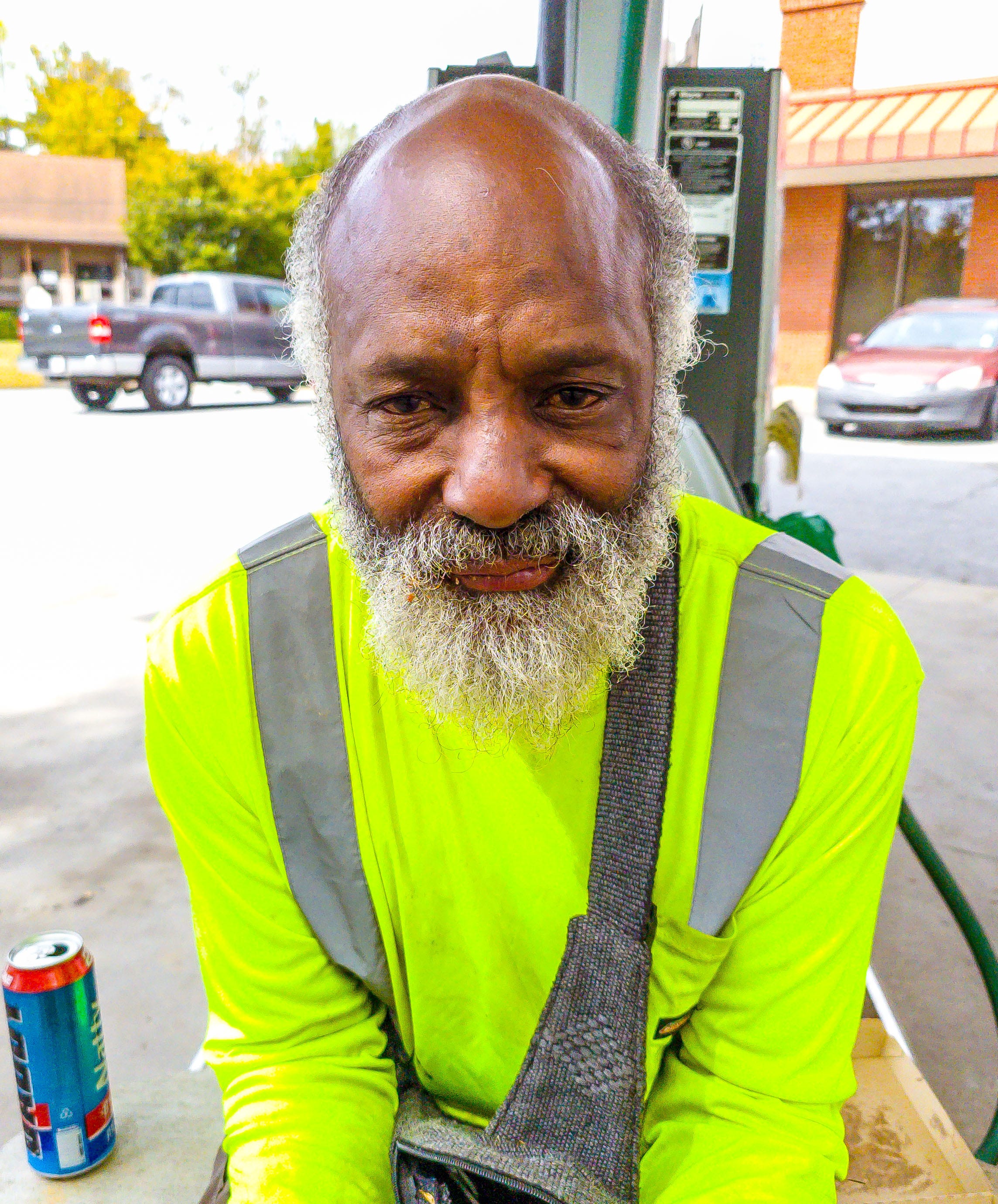
His name is Philip. He sits close to the camera in a fluorescent yellow shirt with broad reflective strips. A bag strap crosses his chest. Cars and commercial buildings fill the background. He looks directly at the lens.
The shirt is designed to make its wearer visible. I keep returning to that practical detail. A man can be conspicuous and still find his most basic needs excluded from public concern. Philip is here, plainly in view, while the lack of a home can be absorbed into the surrounding scene as though it were another ordinary feature of American life.
A secure home gives a person somewhere to close a door, put down possessions, wash, and rest. It also gives us room to be tired or ill, to want company or refuse it, to have hours that belong to us. We rarely count these freedoms when we speak about housing. Yet deprivation of that private space reaches into every part of a life. The world becomes an audience to needs the rest of us can attend to behind a door.
Philip’s claim to that security exists before any explanation of how he came to be without it. When we make shelter conditional on a history we find sufficiently sympathetic, we turn necessity into a test of character. The person in need must account for himself; those of us passing judgment feel no comparable obligation to explain our indifference. I find that arrangement indecent. It allows us to talk endlessly about responsibility while reserving the hardest questions for the man left exposed.
Putting Philip’s portrait before other people creates an obligation for me, too. The attention this photograph receives should lead back to his need for somewhere to live. Admiration for an image can become another convenient stopping point, another way of responding warmly while leaving his circumstances undisturbed.
Philip needs a home. A society that leaves him without one has an obligation to account for its choices. He is here, looking directly at us. We are the ones who owe an answer.
Will Hazlitt, R9 Media Photo Collective