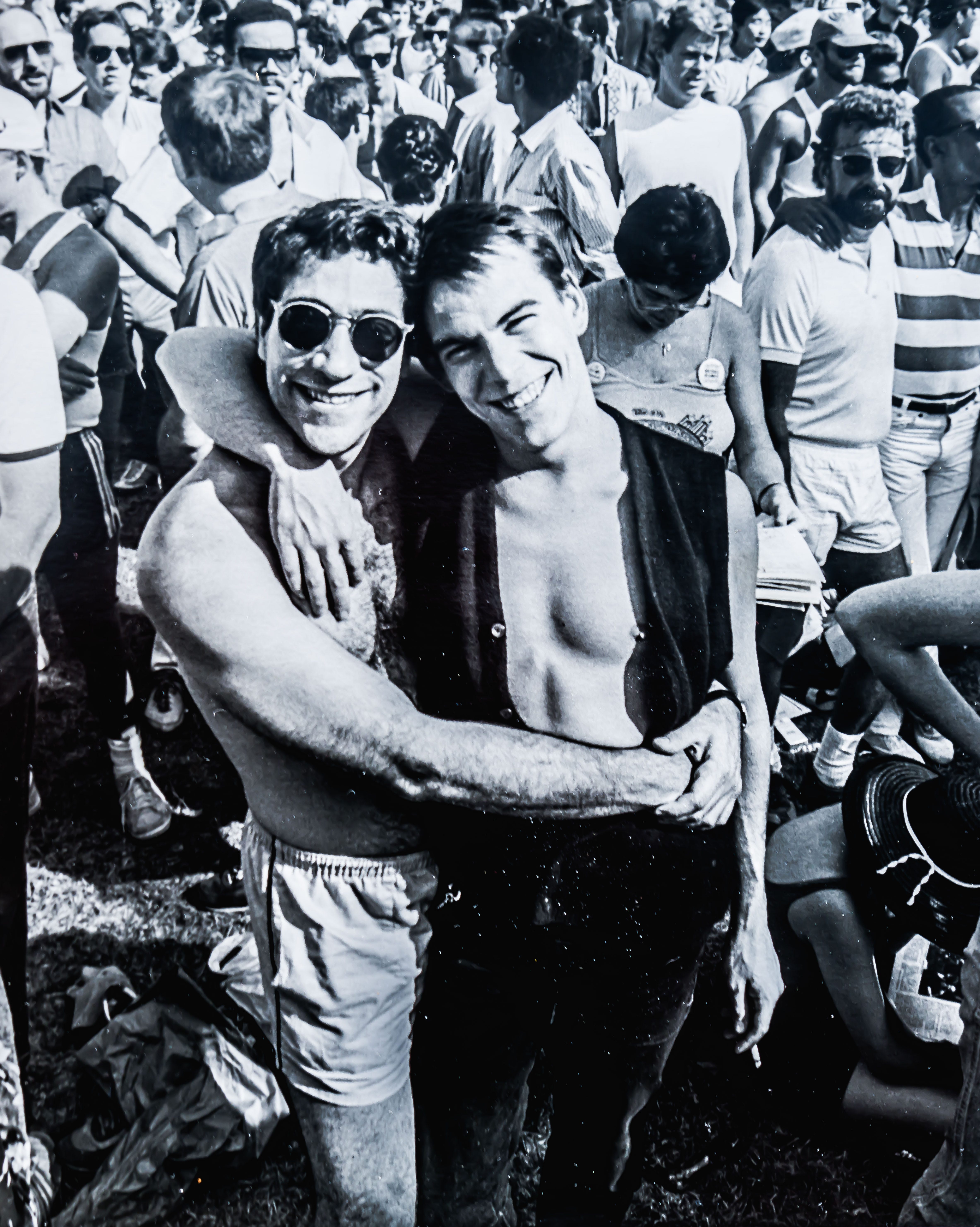
"I return to this photograph with a complicated mix of gratitude and grief. It was made at Gay Pride in Chicago in 1982, a moment that—on the surface—reads as unguarded joy: two men pressed together, smiling openly, bodies relaxed, surrounded by a crowd that feels buoyant rather than threatened. The image later appeared on the cover of Gay Times magazine in 1988, and with that later date comes an unavoidable historical weight that reshapes how the photograph now speaks.
The man on the left is Joe Galanti. Knowing this changes everything. Joe died of HIV/AIDS in 1988, at the height of the AIDS crisis in the United States, the same year this image reached a wider public. What was once a record of affection and confidence has become, with time, a document of impending loss. The photograph does not know what is coming—but we do—and that asymmetry is where its sadness resides.
Formally, the image is almost disarmingly straightforward. The embrace is casual, protective, and unmistakably loving. There is no performance here, no theatrical defiance. Instead, there is ease: shoulders leaning inward, faces turned toward the camera with an uncalculated warmth. Around them, the crowd presses close, yet the photograph creates a small island of intimacy. In 1982, such visibility still carried risk. That these men appear unconcerned with it feels quietly radical.
What unsettles me now is not simply that Joe would die six years later, but that his death was part of a vast, unnecessary erasure—one accelerated by indifference, stigma, and political neglect. The photograph captures a generation in mid-breath, before the full violence of the epidemic made itself known, before joy became inseparable from vigilance and mourning. The smiles remain intact, but they are no longer innocent.
Nearly four decades after Joe’s death, the image continues to ache. It reminds me that the AIDS crisis was not abstract or statistical; it was intimate, physical, and devastatingly personal. Joe is not a symbol here—he is a man with an arm around someone he loves, alive in a moment that history would soon betray. The photograph endures because it refuses to let that life be reduced to tragedy alone. Yet it also refuses to let us forget how much was lost, and how abruptly.
Looking at this image now, I feel both reverence and sorrow. It stands as evidence of love lived openly, and as a quiet indictment of a world that failed to protect it."
- Will Hazlitt


